
Key terms: upgrade coffee maker with grinder | signs you need a bean-to-cup machine | coffee maker upgrade guide | when to buy integrated grinder coffee maker | pre-ground vs whole bean coffee
Most people don’t decide to upgrade their coffee maker — it decides for them. Either the machine dies, or the coffee gets bad enough that ignoring it becomes impossible. But there are earlier warning signs, signals that your current setup is holding you back before it fully gives out. Here are seven signs it’s time to add a built-in grinder to your brewing setup.
Sign 1: You’re still buying pre-ground coffee. This is the big one. Pre-ground coffee starts losing volatile aromatic compounds within 15 minutes of grinding. By the time it’s been bagged, shipped, shelved, and sitting in your cabinet for two weeks, you’re brewing with a shadow of what the coffee could have been. If you’ve never tasted the difference between fresh-ground whole bean coffee and pre-ground, run the experiment: buy the same coffee in both forms from a specialty roaster and brew them back to back. The gap is not subtle.
Sign 2: Your coffee tastes flat, sour, or weirdly bitter. These flavor problems almost always trace back to extraction. Sourness means under-extraction — too coarse a grind, too short a brew, too low a temperature. Bitterness means over-extraction — too fine, too long, too hot. If you’re using pre-ground at a fixed grind size, you have zero ability to diagnose or fix these problems. A coffee maker with adjustable grind settings puts the control back in your hands.
Sign 3: You’re adding flavored syrups to cover up bad coffee. This isn’t a judgment — flavored lattes are delicious. But if you’re adding vanilla syrup or hazelnut creamer primarily because the base coffee isn’t good enough to drink on its own, that’s diagnostic. Good coffee, brewed fresh from whole beans, doesn’t need assistance.
Sign 4: Your morning routine has too many steps. Weigh beans, fill standalone grinder, grind, transfer to filter, brew. That’s five steps before you’ve had coffee, at a time when decision fatigue is at its peak. A bean-to-cup machine with integrated grinder collapses this into: add beans, press button. The fewer steps between you and caffeine, the more likely you are to actually make good coffee every morning instead of reaching for the instant stuff.
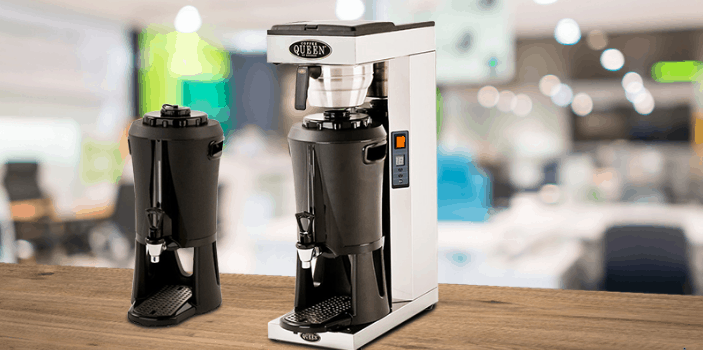
Sign 5: You’re throwing away the bottom half of the pot. If you regularly brew a full carafe and pour half of it down the drain because it went stale on the heating plate, you’re literally paying for coffee you’re not drinking. A grind-and-brew coffee maker with a thermal carafe brews what you need when you need it. Single-serve bean-to-cup machines take this further — grind and brew one cup at a time, no waste.
Sign 6: Your current grinder died or is producing inconsistent results. Burrs wear out. Blade grinders dull. If your standalone grinder is producing uneven grinds — you can tell because your coffee tastes different day to day even with the same beans — replacing it is a good opportunity to consolidate into a machine that does both. The integrated setup costs roughly the same as buying a new standalone grinder plus keeping your existing brewer.
Sign 7: You’ve started caring about coffee. Sounds obvious, but the appetite for quality is itself the signal. If you’ve been reading about coffee roasts, wondering about single-origin beans, watching videos about extraction ratios — your current machine is probably already the bottleneck. The interest in quality will always outpace what a basic setup can deliver. A coffee maker with built-in burr grinder is the logical next step in that progression.
Any one of these signs is worth taking seriously. Three or more means the upgrade is probably overdue.