
Key terms: automatic vs semi-automatic coffee maker | superautomatic coffee machine comparison | semi-automatic espresso grinder machine | fully automatic bean-to-cup | coffee machine automation pros cons
Automatic and semi-automatic coffee makers with grinders are fundamentally different machines despite using some of the same components. Understanding the distinction helps you buy the right machine for how you actually want to interact with coffee — not how you imagine you will, which is often different.
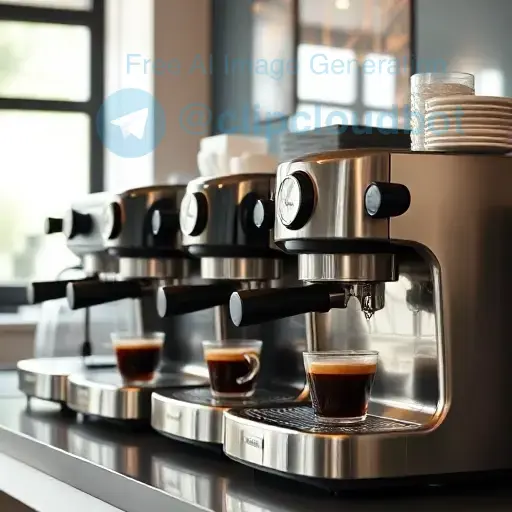
Semi-automatic espresso machines with grinders — like the Breville Barista Express or De’Longhi La Specialista — handle some steps automatically but require human involvement for others. The grinder doses and grinds automatically (or with minimal adjustment). The tamping might be assisted or fully automatic depending on model. But you control when extraction starts and stops — you pull the shot by triggering the pump, and you stop it when the volume looks right. Some models stop automatically at a pre-set volume; others don’t.
This involvement is, for many people, the appeal. Semi-automatic operation means you’re a participant in making your espresso, not just a button presser. You can watch the extraction, adjust next time based on what you see. It builds barista-style intuition over time. The cup you make on day 100 is meaningfully better than the one on day 1 because you’ve been paying attention.
Fully automatic coffee makers with grinders — often called superautomatic machines — do everything: measure beans, grind, tamp (internally), extract, stop at the right volume, eject the puck. The Jura, Philips, and De’Longhi Magnifica lines are the best-known examples. You press a button labeled “espresso” and 30–40 seconds later, espresso appears. No tamping, no timing, no technique required.
The pros of superautomatic: consistency (every cup made the same way), ease (anyone in the household can operate it without training), speed (no prep work), and convenience for multiple drink types from the same machine — espresso, lungo, Americano, cappuccino with automatic milk frothing on some models.
The cons: quality ceiling. A superautomatic’s built-in grinder and brewing system are engineered for reliability and consistency, not for the last 10% of espresso quality. The internal tamping system in a superautomatic machine produces less consistent puck preparation than a skilled human tamp. The extraction control is fixed to the machine’s parameters, not adjustable in the moment based on what you see. For the most demanding espresso drinkers, this matters.
Cost also shifts. Semi-automatic machines with grinders at the $700–$800 level often outperform superautomatic machines at $1,000–$1,200 in raw espresso quality, because the semi-automatic’s engineering budget is focused more narrowly on the brewing mechanism. The superautomatic has to be engineered across the entire automated sequence, spreading that budget thinner.
Grind adjustment differs between the types. Semi-automatic machines typically have user-accessible grind setting adjusters on the top of the grinder — you turn a collar to move through grind levels, usually with detents you feel click into place. You can change the grind between doses. Superautomatic machines often bury the grind setting in a menu or a dial inside the bean hopper that isn’t meant for frequent adjustment — they’re calibrated once and left.
For households with multiple coffee drinkers at different skill levels, a superautomatic is usually the better choice. One person who wants to manually pull shots and one person who just wants coffee quickly will be poorly served by a semi-automatic — the machine’s utility for the less-interested user is low. The superautomatic works for everyone.
For single users who want to develop coffee skills, semi-automatic is the better teacher. The involvement is the point. You’ll waste some shots early. That’s fine. The learning curve is part of the experience.
There’s no universally right answer. The right question is: Do you want coffee to happen to you, or do you want to make coffee? Semi-automatic for the latter. Superautomatic for the former.