
Key terms: bean-to-cup machine quality gap | home coffee vs cafe quality | barista quality home coffee | professional coffee machine home | specialty coffee at home machine
The coffee you buy at a specialty café costs $5–7 per cup. The coffee you make at home costs $0.50–1.50 per cup assuming quality beans. The gap between those two prices used to correspond to a very real gap in quality — café coffee was genuinely better, full stop, because the equipment and trained hands behind the counter couldn’t be replicated at home. That gap has narrowed considerably. Bean-to-cup machines are the primary reason why.
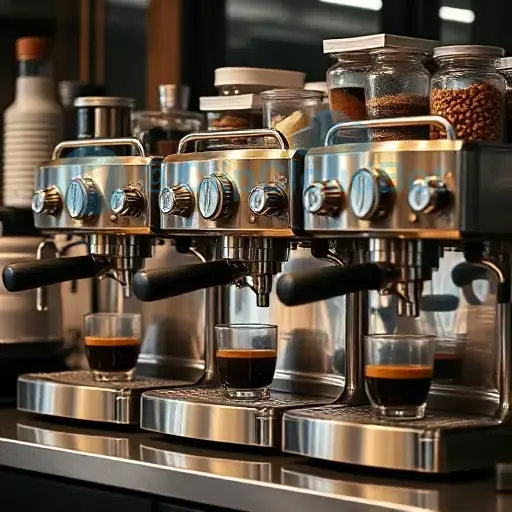
What a café has that a home setup traditionally lacks: a commercial espresso grinder that produces precise, consistent particle distribution; a commercial espresso machine with precise temperature and pressure control; a trained barista who has made 100,000 shots and can diagnose and adjust in real time. Replace all three with a single home consumer and a $200 drip machine, and the quality difference is enormous. But that’s not the comparison worth making in 2024.
The comparison worth making is: a premium bean-to-cup home machine vs. a specialty café. The Jura Z10, De’Longhi La Specialista Arte, or Breville Barista Express Impress incorporate technology that addresses the traditional advantages of commercial café equipment:
Grind precision: The conical burr grinders in modern premium bean-to-cup machines approach — not quite match, but approach — the consistency of commercial grinders. The gap has narrowed from “dramatically worse” to “somewhat worse in ways most casual drinkers won’t detect.”
Temperature control: Commercial machines maintain brew temperature within ±0.1°C using PID controllers. High-end home machines like the Breville Dual Boiler and Jura’s ThermoBlock systems maintain temperatures within ±0.5°C — still an advantage for commercial equipment, but in practical terms the difference is minimal in the cup.
Extraction pressure: Both commercial and home espresso machines target 9 bar. The difference is pump quality and pressure stability during extraction. Rotary pumps (common in commercial machines) maintain more stable pressure than vibratory pumps (common in home machines). Better home machines are moving toward pre-infusion and pressure profiling features that partially compensate.
Where the real gap closed: Milk systems. Home espresso machines now include steam wands and automatic milk frothers capable of producing genuine microfoam — the textured milk that makes latte art possible and café milk drinks different from just adding warm milk. This was the hardest technical challenge to solve at home machine scale, and it’s largely been solved.
Bean sourcing is where home brewers have a structural advantage over most cafés. A café serves what it has; you choose what you buy. Access to direct-trade specialty roasters, subscription services, and single-origin micro-lots means you can brew with better raw materials than most cafés use. Brewing a $25/250g single-origin Ethiopian at home in a machine that extracts it well will produce a cup that genuinely compares to specialty café output.
The honest remaining gap: the trained barista’s ability to taste and adjust in real time. Professional baristas “dial in” espresso throughout service, adjusting grind and dose as temperature, humidity, and bean character shift through the day. Home machines can be set and re-set by a knowledgeable owner, but the constant feedback loop of a skilled professional is hard to replicate.
The verdict: for espresso and espresso-based drinks, a $700–$1,000 home bean-to-cup machine consistently produces results that most café customers would struggle to distinguish from café quality — particularly once you’ve spent a month learning your machine. For filter coffee and pour-over, the home setup has arguably surpassed many cafés already. The tools exist; the quality gap is largely a skill gap now, and skill is learnable.