
Key terms: coffee maker with built-in grinder | bean-to-cup machine | integrated grinder coffee maker | burr grinder coffee machine | best coffee maker grinder combo
Buying a coffee maker with a built-in grinder is one of those decisions that sounds simple until you’re standing in front of seventeen options at the appliance store, all of which look roughly identical and cost somewhere between $89 and $900. So here’s the thing nobody tells you upfront: the grinder is the machine. Not the brewing chamber, not the carafe, not the touch screen. The integrated grinder determines whether your cup tastes like it came from a specialty café or a gas station hot plate.
Start with grinder type. Burr grinders — specifically conical burr grinders or flat burr grinders — crush beans between two abrasive surfaces, producing consistent particle sizes that extract evenly. Blade grinders, which chop beans like a blender, produce uneven grinds that lead to bitter over-extracted chunks floating next to weak under-extracted powder. If a machine doesn’t specify “burr,” assume it’s blade. Walk away.
Next: grind settings. A good bean-to-cup coffee maker should offer at least five distinct grind levels, ideally eight to twelve. Why does this matter? Coarse grind suits longer contact-time brewing like French press or cold brew. Medium grind works for standard drip coffee makers with grinders. Fine grind is essential for espresso machines with built-in grinders. If your machine only has “low, medium, high,” that’s a red flag — you’ll end up locked into one brew style forever.
Hopper capacity is the boring spec everyone ignores until they’re refilling it every two days. A whole bean hopper that holds 250–300 grams comfortably covers a week’s worth of morning coffee for two people. Sealed hoppers with UV protection are better than open ones — light degrades coffee oils fast.
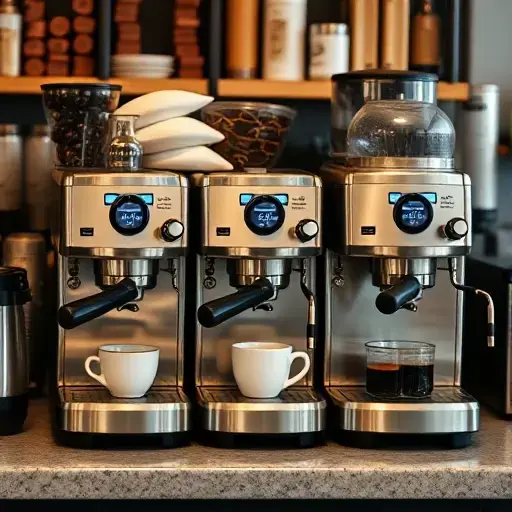
Consider what brew styles you actually drink. A drip coffee maker with grinder makes sense if you want a full carafe in the morning. An espresso machine with integrated grinder — superautomatic or otherwise — handles concentrated shots, Americanos, cappuccinos. Some machines do both, though “does both” sometimes means “does neither particularly well.” Read the reviews with skepticism.
Grind-on-demand vs. pre-grinding. The best bean-to-cup machines grind directly before brewing, not into a holding chamber. Pre-ground sitting in a hopper oxidizes within minutes. If the spec sheet says “grinds fresh per cup,” that’s what you want.
Maintenance: burr grinder coffee machines need monthly cleaning. Some have dishwasher-safe components; most don’t. Factor in 10 minutes of cleaning per week into your decision. Machines with removable burrs are dramatically easier to clean than sealed units.
Budget brackets break down roughly like this: under $150 gets you a blade grinder combo, probably fine for casual drinkers. $150–$300 opens up entry-level burr options — this is the sweet spot for most households. $300–$600 hits mid-range automatic coffee maker with grinder territory with programmable features, thermal carafes, and better grind consistency. Above $600 you’re in premium bean-to-cup machine land: ceramic burrs, precise temperature control, app connectivity.
One underrated factor: noise. Grinder noise levels vary wildly. If you’re brewing at 5 AM in a shared apartment, a 75dB grinder is going to create domestic problems. Some brands advertise quiet grinder technology — it’s worth checking user reviews specifically for noise complaints.
Warranty and brand support matter more than most people realize. A $400 machine with a two-year warranty and available replacement burrs beats a $350 machine with a 90-day warranty and no parts supply. Check whether your brand sells replacement grinder burrs and brew group components separately. Brands like Breville, De’Longhi, and Jura have reasonable parts availability. Generic brands are a gamble.
Final checklist before you buy: Does it have a burr grinder? How many grind settings? What’s the hopper capacity? Can you clean the burrs easily? What brew styles does it support? What’s the warranty? If those five questions have satisfying answers, you’re probably looking at a solid machine. The rest is preference.