
Key terms: coffee grinding freshness science | why grind coffee before brewing | fresh ground coffee chemistry | coffee oxidation grinding | grind before brew importance
The instruction to “grind coffee fresh” appears in every coffee guide, but the reason usually doesn’t. “It tastes better” is true but incomplete. There’s specific chemistry happening inside a coffee bean that explains why the seconds between grinding and brewing matter more than most people realize.
Coffee bean structure is the starting point. A roasted bean is a dense matrix of plant cell walls, oils, sugars, acids, and hundreds of aromatic compounds — over 1,000 have been identified in roasted coffee, more than in wine. The roasting process concentrates these compounds and changes their chemical form. The bean, in its whole form, acts as a sealed container. The dense cellular structure slows the escape of volatile compounds dramatically compared to ground coffee.
Carbon dioxide is the key to understanding freshness. During roasting, the Maillard reaction and caramelization processes produce CO2, which stays trapped inside the bean. This CO2 is important: it’s what causes the “bloom” in pour-over coffee (the puff of escaping gas when hot water first hits grounds), and it actually helps protect flavor compounds inside the bean by displacing oxygen in the cellular spaces. A whole bean holds this CO2 for weeks after roasting. A ground coffee particle releases it within minutes.
Oxidation is the primary freshness enemy. When coffee is ground, the vastly increased surface area — a single bean becomes thousands of particles, each with exposed surface — gives atmospheric oxygen direct access to the aromatic compounds, oils, and acids that make coffee complex and pleasant. Oxidation begins immediately and proceeds rapidly. Research has shown that ground coffee loses measurable volatile aromatics within 15 minutes of grinding at room temperature. Within an hour, a significant portion of the most delicate flavor compounds have oxidized.
Lipid oxidation is particularly impactful on flavor. Coffee oils — primarily triglycerides and diterpenes — are responsible for the rich, full mouthfeel of well-extracted coffee. When these oils oxidize, they become rancid. Pre-ground coffee from a sealed bag has gone through oxidation before packaging, but the vacuum seal slows further deterioration. Once opened, even vacuum-sealed pre-ground coffee degrades within 1–2 weeks.
Temperature accelerates these reactions. At higher ambient temperatures, both oxidation and the escape of volatile aromatics happen faster. This is why coffee stored in warm conditions (near the stove, in a warm cabinet) deteriorates faster than coffee stored at room temperature, and why refrigerating beans (though controversial for whole beans due to moisture condensation) can slow degradation of ground coffee stored in an airtight container.
Moisture also plays a role. Ground coffee absorbs ambient humidity rapidly, which both dilutes the dry flavor compounds and accelerates chemical reactions. This is why ground coffee stored in humid kitchens goes stale faster than coffee stored in drier environments.
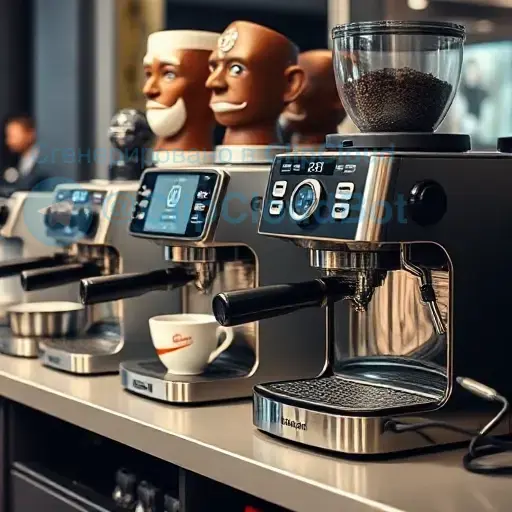
The practical implication for coffee makers with built-in grinders: grinding immediately before brewing captures peak volatile aromatics before they escape. The grind-on-demand function in bean-to-cup machines — where grinding happens directly into the brew group or portafilter immediately before water contact — represents maximum freshness capture. The window between grinding and brew water contact matters: pre-grinding into a holding chamber even 10 minutes before brewing costs you measurable freshness.
The experiment: brew two cups side by side — one from beans ground and brewed immediately, one from the same beans ground and left for 30 minutes before brewing. The difference in aroma alone is detectable before you taste it. The fresh-ground cup will be more complex, more aromatic, and have better texture. This isn’t subjective coffee snobbery — it’s the chemistry of oxidation working on a timescale measurable in minutes.